The James Bond Illusion: Inside the Reputation Engineering of Harry Styles
Reputation engineering only works until the public catches onto the pattern. When you try to align your pop star with living legends like Mick Jagger, David Bowie, and Thom Yorke, the gatekeepers and the artists themselves will eventually push back. So, what happens next?
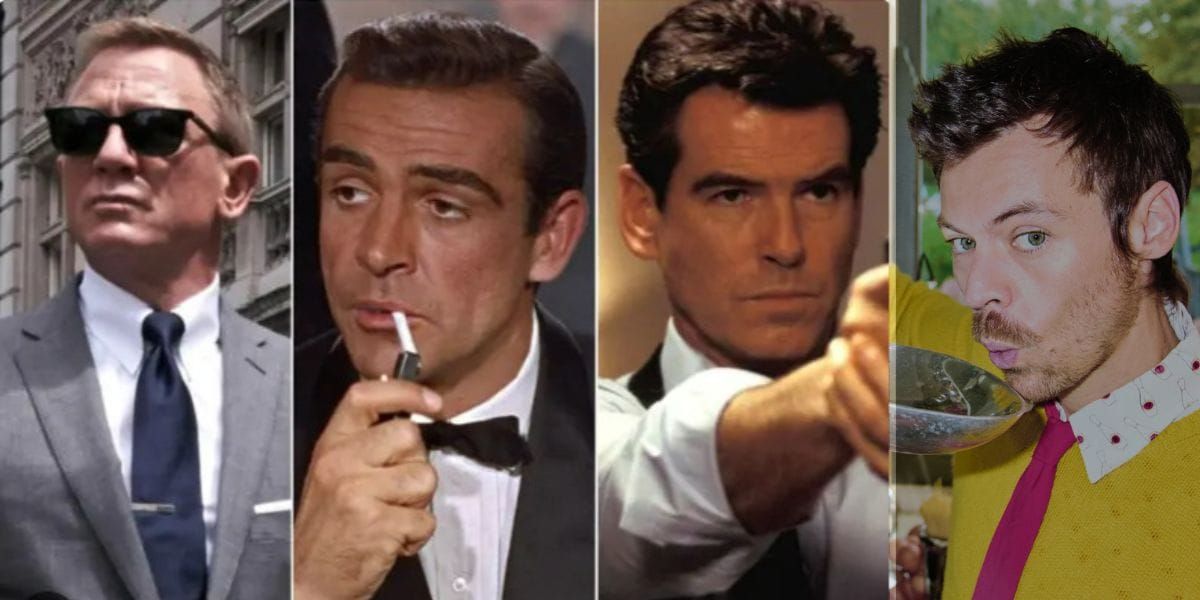
Part 1. Have you noticed how often Harry Styles gets actual, mainstream press for doing absolutely nothing?
Recently, entertainment trades and social media feeds were flooded with articles claiming Styles was "in active discussions" to be the next James Bond. Let’s be honest: he does not fit a single structural category required for 007, and to put it bluntly, he can’t act his way out of a paper bag. Sorry Harry. Stick to singing.
But his casting wasn't the point. What you are witnessing is a corporate entertainment tactic called "prestige by association" or speculative floating. His management team doesn't actually need him to step into a tuxedo; they just need his name in the same sentence as cinema's most enduring icon (and we are getting into Elvis in Part 2). It serves a brilliant, dual purpose: it tricks search engine algorithms into burying his brutal acting reviews (like the wooden performances in Don’t Worry Darling and My Policeman, when the only good scenes are when he's silent and kissing a man) under a mountain of fresh hype, while forcing the public to associate him with elite prestige.
This is the ultimate corporate playbook. And if you track his career, his machine has been running this exact script from the very beginning.
The Living Legend Traps: Mick Jagger and David Bowie
When you have a pop star with this level of massive celebrity, the machine constantly tries to attach them to a historical blueprint to grant them instant artistic credibility. But early on, trying to anchor Harry to living legends kept running into severe reality checks.
First came the Mick Jagger Blueprint. Before One Direction even officially dissolved, the media and his team heavily pushed the "young Mick Jagger" comparison based on the floppy hair, the lean rock-star frame, and the stage swagger. It fell short because Jagger’s persona is rooted in a gritty, dangerous, hyper-masculine blues-rock energy. Harry's brand, by contrast, is polite, safe, and universally palatable pop. And Jagger himself had something to say about the comparison, and it wasn't pretty.
When the rock-god angle failed, the Fine Line and Harry's House eras pivoted aggressively to the David Bowie Blueprint. Suddenly, the narrative was all about gender-fluid fashion, high-concept visual art, and wide-legged trousers. The wardrobe was used like a magic eraser to make mainstream pop music look like avant-garde art. But Bowie was a true musical chameleon who constantly blew up his own sound for the sake of experimentation. Harry, while undeniably fashionable, makes incredibly catchy, safe, middle-of-the-road pop music.
The Radiohead Backlash: The Thom Yorke Playbook
With the release of his latest album, Kiss All the Time. Disco, Occasionally, management attempted their most audacious pivot yet: trying to align Harry with the indie-rock elite by declaring Radiohead his favorite band and orchestrating a massive Rolling Stone "Musicians on Musicians" cover interview with Thom Yorke.
This time, the music press openly rolled their eyes at the corporate absurdity of linking a global pop machine to the high priest of anti-commercial art-rock.
In their review of the album, Pitchfork completely dismantled this reputation engineering, writing that the record is ultimately just "decaf dance-pop" and noting:
"It can sometimes feel like the idea of Harry Styles, World-Beating Superstar, was so predetermined that nobody remembered to ask what he was really into or what drives his music..." Pitchfork described the record's foray into electronic music as "watery," noting that despite its title, the album functions mostly as "tasteful restraint" and safe background music rather than a club-heavy record."
The album avoids the central question of his career: Who are you, really, beyond the designer shorts, convenient wardrobe fails, and mic tricks? One reviewer pointed out that Harry uses the word "you" 326 times on the record compared to "I" only 127 times. Pitchfork argued that this keeps listeners at an arm's length, making the songs feel like they belong to a standard "Harry Styles brand" rather than letting the artist himself feel present.
Prominent independent music commentators immediately highlighted how these hollow indie gestures fail to hide a lack of genuine musical substance. Internet music critic Anthony Fantano of The Needle Drop (March 26, 2026) gave the record a low "light 4/10" score, directly calling out the forced PR alignment:
"These songs here also see him continuing to make some really obvious nods toward artists on the indie circuit that, frankly, do whatever he is attempting here much better... Really interesting, exciting things are going on all the time... None of that shows up on this record at all, like in any form or fashion... Harry couldn't possibly sound more unplugged from all of it."
The media successfully exposed the truth: the Thom Yorke angle was purely aesthetic. Harry's management uses the prestige of these legendary names as a shield to distract from the reality that his musical output remains commercial, safe, and heavily synthesized by corporate producers.
What Comes Next?
Reputation engineering only works until the public catches onto the pattern. When you try to align your pop star with living legends like Mick Jagger, David Bowie, and Thom Yorke, the gatekeepers and the artists themselves will eventually push back.
So, what does a desperate management machine do when they run out of living icons to copy?
They move to the dead ones.
Stay tuned for Part 2 where we unmask the industry’s brand-new pivot—The Elvis Presley Blueprint, and expose how the machine leveraged a massive One Direction nostalgia trap to manipulate a younger generation that doesn't have the historical context to call out the copycatting.
“If nobody's watching, you’ll get away with it.” But we're watching.