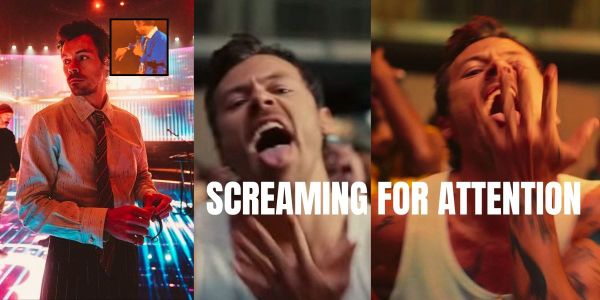
Harry Styles, Borrowed Costume
The mainstream see Harry Styles making pleasant music. They see Harry nod respectfully toward Radiohead and they think he understands what that band meant. He doesn't. He can't. Because understanding Radiohead requires having fought against the machine instead of allowing yourself to be built by it.
Harry Styles walked onto a recent award show stage, and somewhere in the room sat Thom Yorke of Radiohead—a moment that should have felt inconceivable in any universe governed by artistic consistency. Instead, it happened. And it happened because we live in an entertainment ecosystem where fame, not substance, is the organizing principle; where a manufactured pop star can dress himself in the intellectual and emotional gravitas of one of rock's most consequential bands and call it homage.
This wasn't a surprise appearance celebrating Radiohead's influence on music. This was Harry Styles, once again, trying on someone else's skin to see if it fits better than his own manufactured one.
I've made no secret of the fact that I don't care for Harry Styles, but this was personal.
Their landmark 1997 album OK Computer and continuing into electronic-heavy masterpieces like 2000's Kid A, Radiohead perfectly captured the rising sense of dread associated with modern technology and hyper-capitalism. Their music gave voice to existential and modern anxieties, helping listeners process the feelings of alienation that came with the 21st century. When Thom Yorke sang "Fitter, happier, more productive" over a robotic monotone, he wasn't selling a lifestyle—he was holding a mirror to the horror of becoming one. When the glitchy, inhuman beats of “Idioteque” pulsed through my speakers, I felt the cold sweat of a world overheating. Radiohead didn't comfort you; they sat with you in the wreckage.
For those who don't know what I'm talking about with the monotone robotic: "Fitter, Happier, More Productive" was spoken through a monotonous, synthesized Macintosh text-to-speech voice (affectionately known as "Fred"). The track acts as an unsettling parody of 1990s self-help culture, consumerism, and the illusion of the “perfect" modern life.
Now, in the most brazen act of mimicry yet, Styles trots out his own version. On his latest tour, promoting the vapid Kiss All The Time. Disco, Occasionally, he has started using a two-microphone setup during "Ready, Steady, Go!". One mic is clean. The other is run through a distortion or vocoder effect. He leans into the clean one for the sweet, palatable chorus, then swivels to the robot mic for the verses, attempting to sound glitchy and disconnected. He is literally trying to steal the sound of Kid A and shove it into a song about a messy situationship where a girl calls another man's name (actually, I have other thoughts on who Leon is, and no, it's not Louis Tomlinson, but that's another post).
Do you see the difference? Radiohead's robotic voice was a philosophical scream against the dehumanization of modern life—the death of the soul in the age of the spreadsheet. Harry Styles' robot voice is a gimmick. A production trick to make a boring song about "butterflied both our bellies" sound edgy. Yorke used the machine to critique the machine. Styles uses the machine because he is the machine, and he's hoping you won't notice the difference.
Harry Styles is the human equivalent of a Spotify ad with his vapid, frictionless pop. He offers the musical equivalent of a weighted blanket: nice, soft, utterly devoid of confrontation (except to expressing itself through sex and drugs). His music does not process dread; it evades it. Where Radiohead asked "What is the point of all this consumption?", Harry asks "What color should the dildo be in my next Pleasing drop?" To watch him stand on that stage, grinning about his virginity while honoring the band that soundtracked my terror of Y2K, the Iraq War, and the digital panopticon—it felt like watching a man in a costume piss on a grave. He has never written a single bar that made me question my existence. He has only written bars that make me reach for the skip button. And that, more than anything, is the offense: not just the theft of legacy, but the insult of offering nothing in return.
The Architecture of a Constructed Icon
To understand why this matters, we have to start with the fundamental difference in how Harry Styles and Radiohead were built.
Harry Styles didn't emerge from anywhere real. He was assembled. At 16, he was selected from an audition line on The X Factor, a talent competition designed to find the most marketable, most pliable, most controllable young person in a room. He didn't write the songs that made him famous. He didn't develop a sound over years of basement shows and borrowed equipment. He was placed into a pre-constructed boy band where every element, from his hair to his public persona to his romantic entanglements, was calibrated for maximum commercial appeal.
Radiohead, by contrast, clawed their way into existence. Thom Yorke and the band spent years perfecting their craft before anyone cared. They released an album that sounded like everything else (Pablo Honey), got a hit they grew to resent (“Creep”), and then, facing the genuine risk of being swallowed by the machinery of the music industry, they did something radical: they refused to repeat the formula. Instead of pandering to the market, they served their own artistic compulsion. They made OK Computer, a record that questioned technology, alienation, and the atomization of modern life at a moment when the industry wanted them to write "Creep" Part Two.
They chose artistic integrity over commercial safety. That choice had consequences. That choice took guts.
Harry Styles was never given that choice because he was never in a position to make it. His entire career has been a series of brand repositionings, each carefully tested by focus groups and management consultants. Sensitive singer-songwriter? Check. Sexual icon? Check. Fashion risk-taker? Check. The template was always there. He just inhabited whatever version of himself the market demanded.
The grit that defines an authentic artist, the willingness to fail, to be misunderstood, to create something that might not sell, was never part of his equation.
The Voice That Was Never There
Thom Yorke's voice is one of the most distinctive instruments in modern music. It cracks. It soars. It expresses genuine emotion without ever signaling it. When he sings "Climbing up the Walls" on OK Computer, you hear vulnerability that doesn't perform vulnerability, it is vulnerability. When he screams through "Karma Police," you feel the accumulated rage of someone who has actually experienced injustice, powerlessness, and existential dread.
Harry Styles has a pleasant voice. That's it. It's technically competent. It's radio-friendly. It doesn't express anything except a vague contemporary handsomeness. Listen to "Watermelon Sugar"—a song about oral sex dressed up in pastel aesthetic. The vocal is smooth, sexless, utterly devoid of genuine feeling. It's what someone who has never felt honest heart and soul desire might imagine true love desire sounds like.
When you listen to "Let Down" from OK Computer, you're listening to someone describe real alienation from someone trapped in the apparatus of modern life. The music expresses anxiety and disconnection through actual dissonance, through synths that sound like they're malfunctioning, through arrangements that mirror psychological fragmentation. The song builds, fractures, reforms. It's architecture that matches content.
Compare this to "As It Was," Harry's Grammy earworm. The lyrics are decorative: "Holdin' me back / Gravity holds me down"—a pseudo-profound observation about time that could mean anything or nothing. The production is pristine, calculated, and engineered for maximum streaming appeal. There's no risk in it. There's no truth in it. There's only a perfectly constructed image of what song structures and vocal deliveries and modern production techniques suggest should feel meaningful.
This pattern of appropriation runs through the entire arc of Harry's career. It's not accidental. Early Harry tried to invoke Mick Jagger, the swagger, the sexuality, the rock and roll posturing. Never mind that Jagger earned those moves through years of blues-inflected rock and roll and genuine sexual charisma. Harry adopted the costume and called it influence.
Then came David Bowie. The androgynous aesthetic, the artistic reinvention narrative, the notion that Harry was a "style chameleon" willing to take risks. Except Bowie's reinventions came from artistic compulsion and philosophical exploration. Bowie became Ziggy Stardust because he had something to say about identity and performance and the nature of celebrity. Harry becomes different versions of himself because his marketing team decided the previous version had peaked.
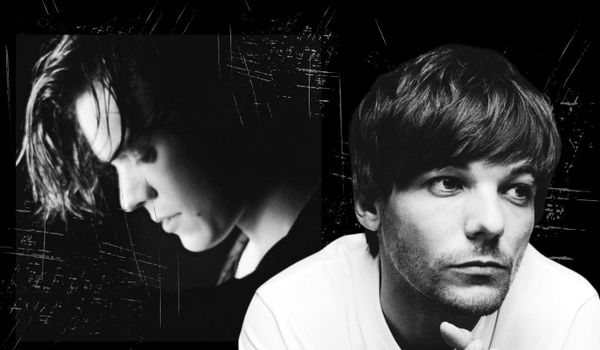
And now—most offensively—he's attempting to appropriate Louis Tomlinson's authenticity. And the cruelty of it; Louis is a former bandmate.
Louis, who has spent the last several years painstakingly rebuilding his career on his own terms, who has stayed independent, who has made genuinely introspective music rooted in his actual emotional experience. Louis, who has been deliberately suppressed by the same industry apparatus that elevated Harry. And Harry, noticing that authenticity is now commercially valuable, has started gesturing toward it, borrowing the aesthetic without the substance.
This is the ultimate expression of a constructed career: the final move is to steal authenticity itself because you've never had the capacity to generate it.
The Insecurity That Performs as Sex
Harry Styles talks about his genitals constantly. In interviews, in lyrics, in public behavior. It's become such a persistent feature of his public presentation that it reads like a compulsion—the kind of thing someone does when they're anxious about their actual significance and need to assert something as a marker of identity or power.
"Lights up, and they scream / Harry!” Is not about what he's created, but about being desired. "Watermelon Sugar"—sex stripped of emotional context, reduced to pure consumption. Even his stage behavior includes explicit dick gestures and references, as if basic biological functionality were somehow synonymous with artistic substance. And should we talk about “Dance No More” and his latest dick swinging exercise? I already did here.
This is what deep insecurity looks like in a constructed star. He was never told his work had to mean something. He was never challenged to develop as an artist. He was told that his sexuality, his image, his marketability was enough. So now, when confronted with actual artists—people who have struggled and suffered and created something that mattered, he can only assert his sexual presence because that's the only authenticity he has and was told to exploit.
Radiohead never had to do this because they had actual things to say. When Thom Yorke screams, it's not to assert his identity, it's to express something true about the human condition. When the band employs dissonance and distortion and unconventional arrangements, it's because those techniques serve the meaning of the work.
Compare "Paranoid Android" to anything in Harry's catalog. One is a seven-minute odyssey through anxiety, isolation, sexual desire, and existential confusion—structured as a suite of three distinct movements, each building on the previous one, each expressing a different facet of human fragmentation. It changed what rock radio could be. It made weird, difficult music commercially viable because it was undeniably important.
"Sign of the Times," Harry's attempted serious moment, is a pastiche of U2's atmospheric production with lyrics about death that could have been written by an advanced algorithm trained on celebrity tributes. It means nothing because it comes from nothing.
This is the core distinction that the mainstream has failed to recognize: Harry Styles' career is an artifact of industrial design. Every element was assembled to fit market specifications. His voice was selected for radio appeal, not for authenticity. His appearance was styled by professionals. His songs were written to be optimized for streaming algorithms. His persona was workshopped and tested and calibrated.
Radiohead emerged from the messy, dangerous, beautiful process of artists figuring out who they were by making art. They were rejected by radio. Their first album was embarrassing by their own standards. They could have disappeared. They were allowed to fail, and in that failure, they found something true about themselves and about the world.
The difference between a constructed career and an organic one is the difference between a museum piece and a living thing. Harry Styles is museum-quality production. Radiohead is a living organism that changes and grows and sometimes mutates in unexpected ways.
And because we live in an attention economy that doesn't know how to value art anymore—only attention, only engagement, only sharability—the museum piece is winning. It gets the award show appearances. It gets the cultural relevance. It gets to dress itself in the legacy of actual artists.
So when Harry Styles walks onto a stage where Thom Yorke is sitting in the audience, and that moment is framed as surprising or significant, what we're really seeing is the triumph of constructed celebrity over genuine artistry in contemporary culture.
Harry didn't earn the right to share a stage with Radiohead through superior work or artistic courage or meaningful contribution to music as a form. He earned it through market dominance—through his willingness to be exactly what the machine needed him to be.
And that's the tragedy. Not that Harry Styles exists—manufactured stars are part of how the industry functions. The tragedy is that we've built a system where this is acceptable. Where someone can construct a career entirely from borrowed aesthetics and aesthetic tourism and still be treated as equivalent to artists who sacrificed everything for their vision.
The mainstream hasn't woken up to this yet. They see a charming man making pleasant music and performing acceptable sexuality and they call it artistry. They see him nod respectfully toward Radiohead and they think he understands what that band meant.
He doesn't. He can't. Because understanding Radiohead requires having made difficult choices in service of truth. It requires having fought against the machine instead of allowing yourself to be built by it. It requires having a voice—not a pleasant tone, but an actual voice, an actual perspective, an actual thing to say.
Harry Styles has none of these things. What he has is a perfect costume and he's spent his career trying on other people's authentic ones, hoping that proximity to realness might eventually rub off.
It won't. And until we rebuild a music industry that can recognize and reward the difference between construction and creation, it won't have to.